|
buy this title
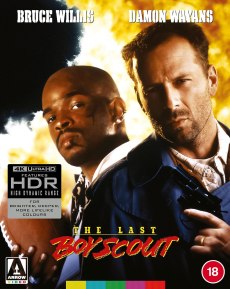
4K UHD Blu-ray (Arrow Video) |
Comparison between the Arrow Video workprint featurette and the theatrical version
26 differences
In 1991, Tony Scott directed The Last Boy Scout starring Bruce Willis, which was somewhat of a box office disappointment but quickly achieved cult status. In addition to the many one-liners, the gritty action scenes have surely remained in many people’s memories. However, the theatrical version also bore clear traces of censorship. But let’s take a step back: Even during filming, there were conflicts between producer Joel Silver, the then-extremely popular Bruce Willis, and the director. Shane Black’s original screenplay is said to have been significantly darker; for example, Marcone’s henchman Milo was supposed to shoot snuff films here and, on the side, kill a family that happened to be present at a crime scene. However, the script was constantly being reworked throughout filming, and much of it was likely never shot. Scott’s first cut was apparently still quite chaotic, and several editors were hired right up until the film’s theatrical release to piece together a result acceptable to the studio from the vast amount of footage. However, it was precisely this version that initially received the commercially problematic NC-17 rating, which wasn’t introduced in this form until 1990. For die-hard fans, various jarring moments in the action scenes have long been evidence of last-minute censorship to secure an R rating, an - as with, for example, the similarly affected Cliffhanger - there has been hope for an uncensored re-release for decades. Workprint Discovery thanks to a Warner request from a college cine club It’s crazy what unusual places you sometimes find hidden gems in - or what stories generally lie behind newly discovered film versions. In the case of Metropolis, a museum in Argentina had an absolute treasure of film history in its archives; deleted scenes from Event Horizon turned up in a salt mine in Transylvania; and the workprint of A Better Tomorrow 2 was discovered purely by chance thanks to a mislabeled audio file and persistent digging. When a “small college campus film club” requested a screening of The Last Boy Scout from Warner, they were certainly astonished to find that the film reels provided contained a previously unknown early version of the film. At the 62-minute mark of the The Bristol Cult Film Society Cult Film Podcast! from July 9, 2026, an Arrow employee revealed this and also noted that they were still waiting for final approval at the time to include this version as a bonus feature on the upcoming 4K Premiere release. The final specs for the 4K Blu-ray from Arrow Video, available since October 12, 2026 (UK) and October 13, 2026 (US)), were then announced a few weeks later, and this pre-release version (or “workprint”) unfortunately did not make it onto the disc in its entirety. But they did at least include the bonus material in the form of a featurette. To explain: Arrow’s Head of Production, James Flower, had already hinted at this in an interview with Damn Fool Idealistic Crusader, and Neil Snowdon, who also works at Arrow, confirmed it succinctly on Bluesky, citing music rights. In any case, the workprint still uses a lot of temporary background music on the audio track that differs from the final theatrical version, and that couldn’t be fully licensed. Differences (as compiled in the featurette) between the workprint and the final versionAt this point, at the very latest, it becomes clear: Unfortunately, we cannot offer a truly classic report, as that would require the version to be available in its entirety. The aforementioned Event Horizon, with its well-known censorship history, was one of the few exceptions. In the Bluesky post it said, “music rights for temp tracks meant we couldn’t include the full work print - sorry! - but the main differences are here,” so ultimately, no claim to completeness is made here. Unfortunately, the documented differences here also suggest that there could be even more discrepancies in the details beyond just the music. Either way, it’s naturally exciting to see what Arrow has compiled from the newly discovered copy which was inadvertently sent out by Warner. 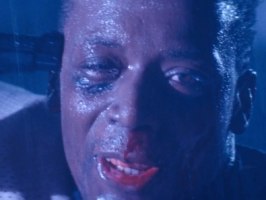 To put this into context, it’s important to emphasize right away what Arrow also describes at the beginning of the featurette: The film copy itself actually came from a late stage of the editing process, meaning there were no fundamental differences in structure, as apparently still existed in Scott’s aforementioned first cut (let alone the original screenplay). For the most part, the version clearly follows the familiar narrative arc of the theatrical version. However, the most important aspect for many fans is obviously that a few bits of violence are longer or presumably still exist here in a form untouched by MPAA interventions. In total, across four instances of bloody gunshots, this amounts to de facto less than a second - but these individual frames in each scene really pack a punch. Typical MPAA, toning down just a tiny fraction of a second is enough to alter the bloodiest moment. You’ll also find plain audio changes / ADR differences, with the latter basically being just standard procedure for some dialogue in U.S. productions. Beyond that, there are several minor re-ordered scenes that primarily illustrate “fine-tuning” in the dramatic structure. At first glance, none of them seem particularly exciting, but there are nuances, such as the repositioned shot of Sarah during the car explosion, that round out the scene a bit better in the theatrical version. Similarly, there are a few alternative takes that work better in the theatrical version, particularly for Bruce Willis’s one-liners. Last but not least, the alternate ending deserves special mention here: Significant changes were made here, as it feels somewhat unusual that the mood between Joe and Sarah was noticeably more conciliatory in the workprint. It should also be noted that the 22-minute runtime of the featurette is misleading. Instead of focusing only on the workprint moments or juxtaposing them directly in a split screen, the same section of the theatrical version is shown generously (= with plenty of identical footage before and after the actual difference) following the workprint material. It is also usually cut off at a different point as well. As mentioned above, the truly exclusive material in this handpicked featurette is, in any case, significantly shorter. Some people were surely hoping for more, but ultimately, well: We can be glad that these small snippets of additional violence, in particular, have resurfaced and been preserved in solid HD quality. By the way, we’ve also collected a few uncompressed screenshots of workprint moments. The featurette begins with a text overlay, and before the actual clips start, there is an introductory note explaining that this copy is a “work in progress”:
This is followed by some background on the version and how it differs from the theatrical version. It is emphasized that the material has not been color-corrected and that, in the presentation that follows, some music tracks have already been replaced because the rights could not be obtained. 

 Each clip is introduced as follows:
Before the workprint scenes, there are also the typical numbers that appear at the beginning of a film reel:
We start with the death of Billy Cole from the opening scene, which Arrow describes as being significantly more graphic in the workprint:
First, here are some comparison images straight from the featurette, which clearly illustrate why the picture in the theatrical version might seem a bit dark to some at first glance. However, the workprint footage here is also obviously too bright, and as you’ll see later with other scenes, it is, in turn, significantly darker and lacks detail in other areas compared to the theatrical version on the older Blu-ray and 4K Blu-ray. Don’t worry, in the HD/4K main cut, the color grading is actually spot on.
Here are the shots from the old Blu-ray and the main feature on the new 4K Blu-ray. Apparently, it’s the same source material; the color grading and framing are quite clearly identical:
For a more accurate assessment of the picture quality than our lightly compressed screenshots allow, please refer to the 4K image comparison on Caps-a-holic.com or actual reviews like the one on whysoblu.com. Unsurprisingly, the new version from Arrow Video is clearly superior. Theatrical version on old Blu-ray 07:24 / Theatrical version on Arrow Video 4K Blu-ray 07:21 Featurette: Workprint 01:55–01:56 / Featurette: Theatrical Version 02:18 In the headshot scene, there are several additional bloody frames both at the end of the frontal shot and at the beginning of the follow-up shot from behind. Workprint is 0.4 sec longer
Next comes the phone call with Mike:
Here, a different color scheme is clearly noticeable.
Additional material in the theatrical version Theatrical version on old Blu-ray 09:50–09:51 / Theatrical version on Arrow Video 4K Blu-ray 09:48–09:49 Featurette: Workprint 02:52 / Featurette: Theatrical version 03:15–03:16 After seeing Mike, Joe appears a little earlier in the theatrical version. Here, Mike says off-screen in the workprint, “would let me sleep with her,” while in the theatrical version it says, “would let me fuck her.” Theatrical version is 1.1 seconds longer
Next, Joe speaks into the rearview mirror while in the car. Here, too, the theatrical version is longer, but this time, an alternate take is also used for the first time in the workprint.
Alternative / Additional material in the theatrical version Theatrical version on old Blu-ray 10:38–10:53 / Theatrical version on Arrow Video 4K Blu-ray 10:36–10:51 Featurette (workprint) 04:04–04:14 / Featurette (theatrical version) 04:41–04:56 Joe says, “Nobody likes you. “Everybody hates you.” in the workprint, still from the same angle, while the theatrical version zooms in closer and shows his eyes in the rearview mirror. Only in the theatrical version does he then say, in a close-up, “You’re gonna lose.” followed by “Smile, you fuck.” The workprint also has him say “Smile, you fuck,” but it’s a different take in which Joe actually grins broadly. Theatrical version is 4.9 seconds longer
Next up is Mike’s exploding car and, as explained in the introduction, a different arrangement of the shots here creates a different effect on the viewer. The fact that Sarah still has feelings for Joe is somewhat dramatized by the later placement of the shot of her.
Theatrical version on old Blu-ray 17:57 / Theatrical version on Arrow Video 4K Blu-ray 17:55 Featurette: Workprint 05:43–05:44 / Theatrical Cut 06:40 The shot of the hand on the key begins slightly earlier. Workprint is 1.3 seconds longer
Re-ordered scene Theatrical version on old Blu-ray 18:08–18:13 / Theatrical version on Arrow Video 4K Blu-ray 18:06–18:11 Featurette: Workprint 05:55–06:00 / Featurette: Theatrical version 06:51–06:56 In the theatrical version, the baseball rolls across the street first, then Sarah arrives and calls out “Joe!”. In the workprint, these two shots were swapped. Note: It’s also easy to see here that the theatrical version isn’t consistently too dark; in the workprint, quite a few details are lost in black. Workprint is 0.3 sec longer
Theatrical version on old Blu-ray 18:19 / Theatrical version on Arrow Video 4K Blu-ray 18:17 Workprint featurette 06:07–06:10 / Theatrical version featurette 07:02 Another shot of the burning car before Sarah turns around. Workprint is 2.5 seconds longer
This is followed by another alternate take, where Cory smiles at Jimmy in the flashback.
Alternate / Additional material in the theatrical version Theatrical version on old Blu-ray 38:28–38:33 / Theatrical version on Arrow Video 4K Blu-ray 38:26–38:31 Featurette: Workprint 07:48–07:52 / Featurette: Theatrical Version 08:19–08:23 Between two shots of Jimmy crying, the workprint includes a different shot of Cory. In the theatrical version, the camera also zooms in on her slightly. The theatrical version is 0.8 sec longer
Now for a slightly different change, purely on the audio track during the “Touch me again, I’ll kill you” scene.
Audio Change Theatrical Version on old Blu-ray 63:07–63:25 / Theatrical Version on Arrow Video 4K Blu-ray 63:05–63:23 Featurette: Workprint 08:49–09:07 / Featurette: Theatrical Version 09:25–09:43 The workprint still features the original piano playing (with some discordant notes) by one of the henchmen in the background and some dramatic score when Joe is slapped on the cheek. In the theatrical version you hear some high notes instead, which is a bit odd as you can clearly see the guy playing the left part of the piano.
Theatrical version Next comes some censorship during the shooting scene with the hand puppet ‘Furry Tom’.
Audio change Theatrical version on old Blu-ray 76:13–76:24 / Theatrical version on Arrow Video 4K Blu-ray 76:11–76:22 Featurette Workprint 10:22–10:33 / Featurette Theatrical Version – In principle, this is never exactly a frame-by-frame comparison in the featurette, but the excerpt from the workprint in the featurette starts significantly earlier than its corresponding segment in the theatrical version. Visually, there are no differences from how the scene plays out in the actual theatrical version here though. But there are indeed differences on the audio track. A new ADR take was used for the theatrical version, and in addition to the different emphasis in the hand puppet’s lines, it’s particularly noticeable that the workprint still says “cross the street,” whereas the theatrical version says “cross the road.”
Theatrical version Theatrical version on original Blu-ray 76:44 / Theatrical version on Arrow Video 4K Blu-ray 76:42 Featurette: Workprint 10:54 / Featurette: Theatrical Version 11:21 In fact, a jump cut in the theatrical version is revealed here, as the two bloodiest frames of the headshot have been removed there. Workprint 0.1 sec longer
Theatrical Cut on older Blu-ray 76:44 / Theatrical Cut on Arrow Video 4K Blu-ray 76:42 Featurette: Workprint 10:54 / Featurette: Theatrical Cut 11:21 The following shot of Jimmy begins a moment earlier. Workprint 0.3 sec longer
Theatrical version on old Blu-ray 76:46 / Theatrical version on Arrow Video 4K Blu-ray 76:44 Featurette: Workprint 10:56 / Featurette: Theatrical version 11:23 The first two stills from the bloody next hit were removed from the theatrical version, followed shortly after by another one. Workprint 0.2 sec longer
Moving right on to the next censorship involving a leg shot.
Bonus material in the theatrical version Theatrical version on older Blu-ray 90:41 / Theatrical version on Arrow Video 4K Blu-ray 90:39–90:40 Featurette: Workprint 12:08 / Featurette: Theatrical Version 12:52 First, there’s a shot in the theatrical version that’s longer, where you can see a burning gangster in the background. Theatrical version is 0.5 sec longer
Theatrical version on old Blu-ray 90:54 / Theatrical version on Arrow Video 4K Blu-ray 90:53 Featurette: Workprint 12:21 / Featurette: Theatrical version 13:05 Now for the truly interesting difference in the scene: The leg shot is a few bloody frames longer at the end. Workprint 0.3 sec longer
This is followed by a extension of the dialogue between Senator Baynard and the police officers. Here you can see a long segment lasting over 4 minutes, partly because the scene in the workprint is simply edited together in a different order.
Alternative Theatrical version on old Blu-ray 96:37 / Theatrical version on Arrow Video 4K Blu-ray 96:35 Featurette: Workprint 13:58–14:04 / Featurette: Theatrical version 18:16 In the theatrical version, there is a smooth fade from the stadium to the scene outside. In the workprint, it’s a normal cut, and the outdoor shot begins significantly earlier. Workprint is 6 seconds longer
Additional material in the theatrical version Theatrical version on old Blu-ray 96:46–96:50 / Theatrical version on Arrow Video 4K Blu-ray 96:44–96:48 Featurette: Workprint 14:13 / Featurette: Theatrical version 18:25–18:29 The theatrical version has a bit more dialogue between Darian and Joe. After that, the shot of the senator also begins a moment earlier, and his “There!” was already heard off-screen in the workprint over the previous shot. Theatrical version is 4.3 seconds longer
Alternative Theatrical version on old Blu-ray 96:51–96:58 / Theatrical version on Arrow Video 4K Blu-ray 96:49–96:56 Featurette: Workprint 14:14–14:20 / Featurette: Theatrical version 18:30–18:37 The workprint immediately cuts to a closer shot here, in which Joe speaks (unintelligibly) to Darian while the senator is still saying, “There’s the bastard that’s been making the phone calls.” This is followed by a slightly more distant shot. The theatrical cut cuts to the same lines (in a new ADR recording) and immediately to the more distant shot, where Joe is still looking at the senator. He leans down toward Darian, and we see the senator again, touching his nose. Theatrical cut is 0.9 sec longer
Alternative / Re-ordered scene Theatrical version on old Blu-ray 97:12–97:15 / Theatrical version on Arrow Video 4K Blu-ray 97:10–97:13 Featurette: Workprint 14:34–14:55 or 14:56–15:00 / Featurette: Theatrical version 18:52–18:55 In the theatrical version, you can see the police cars and Sarah joining the scene again here. Then the scene moves on to Jimmy and Darian—and after they were visible for a second in this shot, the police cars and Sarah are also shown in the workprint.
In the workprint, Joe, who’s still ranting a bit, is led away for a longer time. Bessalo comes over to him and calms him down a bit. Bessalo: “OK! I mean, are you crazy? Is there no stopping you? You knocked his teeth out.” Joe: “Bad habit.”
Workprint is 20.9 seconds longer Theatrical version on old Blu-ray 97:18 / Theatrical version on Arrow Video 4K Blu-ray 97:16 Featurette: Workprint 15:01 / Featurette: Theatrical version 18:58 In the workprint, Sarah comes running from a bit further back. Workprint is 1.1 sec longer
Alternative / Additional material in the theatrical version Theatrical version on old Blu-ray 97:28–97:35 / Theatrical version on Arrow Video 4K Blu-ray 97:26–97:33 Featurette: Workprint 15:12–15:14 / Featurette: Theatrical Version 19:08–19:15 In the alternate take, Joe says “And then some,” and only the theatrical version then includes a reaction shot of Jimmy. Theatrical version is 5.3 seconds longer
Alternative / Additional material in the theatrical version Theatrical Version on older Blu-ray 97:45–97:48 / Theatrical Version on Arrow Video 4K Blu-ray 97:43–97:46 Featurette: Workprint 15:24–15:25 / Featurette: Theatrical Version 19:25–19:28 A different shot of Sarah. The theatrical version is 2 seconds longer
Alternative / Additional material in the theatrical version Theatrical version on old Blu-ray 97:51–98:44 / Theatrical version on Arrow Video 4K Blu-ray 97:49–98:42 Featurette: Workprint 15:28–16:05 / Featurette: Theatrical version 19:31–20:24 Before the two fall into each other’s arms, a longer stretch of dialogue plays out quite differently. Joe is seen a bit longer in the workprint. After several reaction shots between the two, Sarah says, “Should we say something?” Joe then replies, “Fuck you, Sarah,” and she responds “What?” He repeats “Fuck you,” and she can’t help but smile slightly. Both here and in the subsequent reaction shots between the two, different takes are used than in the theatrical version. The mood here is a bit more serious.
In the theatrical version, Sarah says instead: “I’m so sorry. Please forgive me. I’ll buy a dog.” Here, too, Joe mutters in a different shot: “Fuck you, Sarah.” She is briefly taken aback, and he smirks; she grins back. Overall, this is a more lighthearted resolution to the scene than in the workprint.
The theatrical version is 16.3 seconds longer Alternative / Additional material in the theatrical version Theatrical version on old Blu-ray 98:47–99:05 / Theatrical version on Arrow Video 4K Blu-ray 98:45–99:03 Featurette: Workprint 16:08–16:16 / Featurette: Theatrical version 20:27–20:44 In the workprint, the two of them stay in each other’s arms a little longer in the same shot, and there are a few reaction shots.
The Theatrical Version switches to Joe right away instead, and in other takes, he says: “Fuck you, Sarah. You’re a lying bitch, and if the cops weren’t here, I’d spit in your face.”
Theatrical Version is 9.3 seconds longer Alternative / Additional material in the theatrical version Theatrical version on old Blu-ray 99:48–99:54 / Theatrical version on Arrow Video 4K Blu-ray 99:46–99:52 Featurette: Workprint 16:59–17:02 / Featurette: Theatrical version 21:27–21:33 In an alternate take, which is significantly shorter in the workprint, Marcone opens the suitcase. Theatrical version is 3 sec longer
Theatrical version on old Blu-ray 100:12 / Theatrical version on Arrow Video 4K Blu-ray 100:10 Featurette: Workprint 17:20–17:22 / Featurette: Theatrical version 21:51 The shot of the cliff and the sea is slightly longer. Workprint is 1.7 sec longer
In Featurette: Workprint 17:36 / Featurette: Theatrical Version 22:06 , the segment from the theatrical version in the featurette simply fades to black, suggesting that the segment from the workprint onward contains exclusive footage. However, at least the next 22 seconds can still be seen exactly as they appear in the theatrical version on the old Blu-ray 100:26–100:48 / theatrical version on the Arrow Video 4K Blu-ray 100:24–100:46. Theatrical version on the Blu-ray 100:48 / Theatrical version on Arrow Video 4K Blu-ray 100:46 Featurette: Workprint 17:58–18:12 / Featurette: Theatrical version 22:06 In the workprint, Darian runs after Jimmy and briefly plays football with him. Joe then turns to Sarah and they kiss. Workprint is 13.3 seconds longer
|