|
buy this title
|
Release: Sep 08, 2011 - Author: Mario - Translator: Mr Miau
- external link: IMDB - more from this series
In the future, humanity has expanded into space and started colonizing the galaxy. The new centre is the planet Yuma. The Army High Command of the so-called “New Frontier” is supposed to protect mankind's planets. However, the peace is being disturbed when the Outriders, phantom beings from another dimension, raid the planet Alamo. Both sides' forces suffer heavy casualties and the Outriders lose by only a small margin.
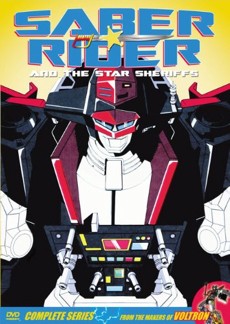
After 15 years of rebuilding, the Outriders return with new technology and determination. This time, mankind is in an inferior position and close to defeat. The secret project “Ramrod”, a starship able to transform into a combat bot, seems to be the last hope. It belongs to the “Star Sheriffs”, a special force under the command of Commander Eagle. When the Outrider spy Vanquo finds out about the project, a race with time begins. Star Sheriff agent Saber Rider needs to capture the spy before Ramrods location becomes public. After he fails, he teams up with the race driver Fireball and Colt the Headhunter. Together with Commander Eagle's daughter they can save Ramrod and use it to fight against the Outriders. IntroSaber Rider and the Star Sheriffs (SRatSS) is a cartoon series from the US consisting of 52 parts. It combines the Science Fiction, Mecha and Western genres. Having been first broadcasted into people's homes in 1982, it quickly became very popular and has by now achieved cult status. The reasons for that were partly the catchy soundtrack and good synchronisation. Even in other countries – e.g. Germany – very good voice actors were hired to keep the atmosphere. Recent releases on DVD and even the announcement of a ”Saber Rider video game“ for 2012 show that the series' fan base is still numerous and active.
The Origins - Seijûshi BismarkWhen Saber Rider and the Star Sheriffs was released in the USA, nobody there had a clue which development the series had gone through. Originally, it came from Japan and was named Seijûshi Bismark (SJB), approximately meaning ”Star Musketeer bismark”
Seijûshi Bismark is a mecha anime series by Studio Pierrot, Japanese animation studio, which also created The Wonderful Adventures of Nils and, more recently, Naruto and Bleach. In 1984, Seijûshi Bismark was broadcasted for the first time on the Japanese Television network “Nippon Television”. However, it was not as successful because it did not really stand out against the mass of anime series at the time. A short plot extract: It is the year 2069. Mankind has leath earth and started colonizing the planets of the solar system. However, the peace they hoped for does not last long because the “Deathcula” aliens attack the solar system. The federation of the planets gets together all their forces and can hardly fight the invaders back. 15 years later, in 2084, the enemy they thought defeated returns. The Federation this time cannot protect all the planet's inhabitants who are unable to defend themselves. The scienties and general secretary of the federation, Dr. Charles Louvre, develops a combat unit called “bismark”, an armed spae ship which can transform into a mecha bot. A team consisting of four specialists is supposed to steer it: The 17 years old pilot Shinji Hikari from Japan, 16 years old head hunter Bill Willcox from the US, 18 years old agent Richard Lancelot from Scotland and the 15 years old Marianne Louvre from France, the scientist's daughter. The Genesis of Saber Rider and the Star SheriffsIn 1986, worldwide rights for Seijûshi Bismark were bought by the US company In the process, Seijûshi Bismark underwent the same alterations as other imported anime series. Violent and morally quiestionable scenes were cut or their dialog changed. The plot, characters and soundtrack were replaced and assimilated to the American culture. WEP also only published 46 of the series 51 episodes but produced 6 new episodes instead. One of the main factors in the adaption was the underlining of the Wild West theme. Seijûshi Bismark combined Science Fiction with some Western elements, the latter playing a more important role in the US because WEP wanted to give it a certain Wild West style. This probably is connected to a certain trend in the TV series at that time, starting in 1986 with ”Galaxy Rangers”, followed by”Bravestarr”, appearing at the same time as Saber Rider one year later. Seijûshi Bismark became Saber Rider and the Star Sheriffs. In this new form, the series was not only a hit in the US but also in Europe and South America. How and why the series was changed so massively, is to be discussed in the following. From now on these names will be used:
NamesAlmost all of the names of characters, locations, organisations and vehicles were changed, most of the new names originate from the US or Wild West cultural background in order to emphasize this aspect further. Additionally, connections to the real world were cut and the story was moved out of our solar system. The most important nacmes are: Note: From now on I will only use the names from Saber Rider as it is the more popular version. However, the first time I mention a name I will also mention the original name if known
AmericanizationThe term “Americanization” describes the already mentioned process of assimilating a foreign series to US culture. Especially foreign elements as symbols or names are changed because they might seem strange to the viewer. In this case, however, this affects mostly the names (see last paragraph). SoundtrackOne of the most striking changes aimed at giving the series the Western flair was the newly arranged and partially rewritten soundtrack, responsible for this is the US composer Dale Schacker. For example, he completely rewrote the intro music. The catchy”Saber Rider Main Theme” was surely one of the main reasons for the series' success. This main theme was replaced in some other countries, e.g. France (new theme: “Sab-Rider”) and Italy (“Sceriffi Delle Stelle”). The sound effects had to be newly created as well because they were on the same audio channel as the soundtrack. Intro and OutroThe US Version features a new intro and outro. Details about this can be read in article about the first episode. Episode PreviewsThere are short previews to the next episode in both versions. The Japanese Version shows the preview after the Outro and it is the characters who comment on it. In the US Version it is part of the Outro and there is a narrator saying something about the preview. Episode titlesIn the Japanese Version, the episode title is being displayed in an additional shot between the intro and the episode. The US Version, however, features a title overlay at the beginning of each episode. Censorship of the seriesSeijûshi Bismark is filed under the so-called Shonen-genre in Japan. Despite the violence and brutal scenes, series of this genre are declassified for young people aged about 8 – 17. A little blood, death and promiscuity are no problem for the young Japanese, resp. their parents. Unlike in America or Europe, where scenes of this kind have no place in children's shows. This is the reason Seijûshi Bismark had to be censored thoroughly, since the series contained too many violent scenes for an afternoon-show. WEP used two methods for this. Aside from the simple cutting of scenes, the "verbal cutting" was done on a large scale. The characters were made saying fitting words during the dubbing to belittle questionable scenes without having to cut every single time. WEP censored in a way that there is not a single living being losing their life in the entire series. Some of the used censorings may come across as ridiculous. Something basic concerning the verbal censoring. Basically, this kind of censoring was done to a huge part of all the dialogue, meaning that all dialogue was "toned down" and harsh language, cursing etc. cannot be found in the American version. In the following, you find a listing of the common censorings. Violent scenes against the outridersMost violent scenes agains the outriders were censored by the dubbing. Since there are countless outriders killed in each episode, WEP couldn't simply cut this all the time, but had to use verbal censoring. The outriders are shown as "phantom creatures" in the American version, that don't die, but are teleported to their home planet, the so called "phantom-zone". This censoring benefits from the fact that the outriders disintegrate even in the Japanese version after their deaths. Almost every time an outrider is killed, there is dialogue heard in Saber Rider, like: "Back into the phantom-zone!" "You sent him back into his dimension." Due to this change, the audience is fooled, thinking the outriders cannot die. In that case, it doesn't matter how many of them get killed. They return to their planet and attack again. Despite this clever censoring-method, additionally there were the most violent parts were cut. For example: 1. An outrider's arm is sliced off with a sword. 2. An outrider is shot in the head and black blood flows out. Violent scenes against humansNearly all the scenes during which people are visibly being shot, hit or blown up, have been removed from the series. Other scenes were belittled with the verbal censoring. In these cases, the outriders use weapons that don't kill people, but merely tranquilize them. This is shown nicely in dialogues like "set your guns to tranquilizing". During scenes, in which the outriders shoot vehicles or attack/bomb cities, there are only remote-control vehicles shot down and evacuated cities destroyed, thanks to the dubbing. For example: 1. "The people were rescued, but many of our automatic transport vehicles were destroyed in a shower of devastating bullets." 2. "The people were all gotten to safety. We've evacuated them as soon as the first signs of Nemesis' fleet have shown up on radar." Further censoringsAside the pure violence censoring, WEP has taken some more censorship-tweaks to the series. All the scenes that seemed in any way questionable and immoral, were cut or censored via dubbing, just like the violent scenes. Among others, these are: Emotional scenes (aggressive behavior, outbursts of fury, sadness, tears and the like) Example 1: A person bursts out in anger and curses. Example 2: A person starts crying and talks with a desperate expression in the voice. Censoring: Scenes like these were mostly belittled or completely purged by the dubbing, by having the respective person just speak "normally". It has to be mentioned that solely by the pure violence censorings, many emotional scenes have become obsolete and therefore had to be censored, as well. When, for example, a person's death was cut out, the sadness about that also dropped. The scene became redundant that way. A good indication for censorings like this are scenes in which a character has visibly tears in their eyes, but still talks normally. Consumption of alcohol Example: The people are having a glass of wine. Example of censoring: The "wine" is changed into "cactus-" or "guava-juice" by dubbing. Violence against children Example: A father hits his son as a punishment. Example of censoring: Such, rather rare scenes have simply been removed. Children with guns Example: A child carries a gun and uses it, too. Example of censoring: The real gun was turned into a "toy gun" by dubbing. The use of the weapon has been removed. Plot scenes with doubtful content Example: One of the main chaaracters plays russian roulette with a prisoner. He shouts angrily at the prisoner as he does that. Example of censoring: A large part of the scene was cut out and the rest simply dubbed with a pointless dialogue, so the russian roulette is virtually gone. The charactersAt this point, it comes to nobody's surprise that the characters also had to have some changes. The list of differences is long. Apart from the earlier mentioned change of names, the characters' background have often been changed: e.g. their occupation/rank, the motives for their acting, relation to another person/kinship etc. Also, an "evil character" could have been made a "good character" or the complete origin/race has been changed. For censoring reasons, all the support characters who died in the Japanese version, had to be kept alive, too. These are not all changes, though. Thanks to the censoring, there are less emotions shown in Saber Rider compared to Seijûshi Bismark. This leads to the characters coming across as less authentic considering their feelings, because part of their humanity has been taken away. In return, the American version offers more dialogue and puns compared to the Japanese version. Based on some main characters, I would like to give a few examples for the changes in the characters. Fireball (Shinji Hikari) In the Japanese version, Fireball is an army pilot and is later promoted to lead of the Ramrod fighting ship due to his outstanding qualities. He is a good friend of April Eagle's (Mariann Louvre) since school and takes part in car races in his free time. Fireball is a good leader, but also a hotspur, who likes to solve problems on his own. In the American version, he is a professional race driver. By accident, he gets to know Saber Rider, Colt and April in the beginning of the series and is made a Ramrod pilot and Star Sheriff by some pieces of luck. He was stripped off the leader-rank, though, and he is officially called the "youngest" in the team. This disempowerment changes little in Fireballs' characteristic role in the series. Saber Rider (Richard Lancelot) Saber Rider is the oldest, most mature and calmest main character, He is basically the "thinker" with most experience, who acts well-considered and provides his colleagues with useful information all the time. In the Japanese version, he works for the British secret service. Due to his skills in the field of intelligence services, he is deputized to a member of the Ramrod team by the government of the planet Yuma. In the American version, he is a "Star Sheriff"-agent and supposed to guard the fighting ship Ramrod from the outriders. Due to his rank, he was made the ship's captain and the team's leader much earlier. Saber Rider's leadership is one of the biggest changes in the series. This is clear by even the title change from Seijûshi Bismark into Saber Rider and the Star Sheriffs. There were more changes needed to make Saber Rider's leadership believable.
The question is, why WEP picked, of all the characters, Saber Rider for the leader's role. It is probable that an experienced and prudent character like Saber Rider is more fitting to direct a team and lead it with well-thought-out decisions. Young hothead Fireball is missing this role model-function since he always acts spontaneously and is ready to get into dangerous situations. Despite the extensive changes, Fireball's original position could not completely be suppressed, he is too dominant for that. Most of the time, he takes the lead in discussions and always wants to have the last word. Also, he is standing in the front all the time, which confirms his leading role. Colt (Bill Willcox) On first sight, the cowboy was changed hardly at all. In both versions, he is a former headhunter with a loose mouth, a weakness for women and a talent for putting a foot in it. He is also an excellent marksman. Since his parents were killed by the outriders, he has devoted himself to fight them. In the Japanese version, Colt acts much more hate-filled, aggressive and willing to use violence against the outriders compared to the American version, where his parents' deaths are merely hinted at. There are prominent changes in Colt's introduction in the series. In the Japanese version, he is supposed to find Fireball as a headhunter, hired by the government. It is finally revealed that Colt is supposed to become a member of the Ramrod team along Fireball, Saber Rider and April. In the American version, he is headhunter the outrider spy Vanquo and only accidently meets the other main characters. Together with Fireball, he is made a member of the team and a Star Sheriff, due to a chain of lucky events. April Eagle (Marianne Louvre) Commander Eagle's daughter is the only female Star Sheriff in the Ramrod team. In the Japanese version, she is merely 15 years old and is therefore acting more childish and sensitive than the other characters. In the American version, she is depicted much more mature and adult. In both versions, she is agent and navigator of the Ramrod. In the American version, she was also made a scientist and Ramrod's developer. In the Japanese version, those are actually her father's jobs. Commander Eagle (Dr. Charles Louvre) April's father is one of the lesser changed characters of the series. In the Japanese version he is the general secretary of the star federation, which should compare to the American version's president of the new frontier. Additionally, he is scientist and developed the Ramrod fighting ship. In the American version, he is one of the highest ranked officers of the cavalry command. Even though he was changed from politician to officer, his role in the series has remained identical. Jesse Blue (Perios) The Star Sheriff's arch enemy is the character who was changed the most in the series. In the American version, he is an arrogant Star Sheriff cadet, who falls in love with April eagle, but is rejected by her. Due to his hurt pride over this rejection, he defects to the outriders and starts fighting the Star Sheriffs. This way, he wants to prove April that he is better than everyone else and she should have never rejected him. In the Japanese version, Jesse Blue is no human, but a slick, high-rank outrider who fights the Star Sheriffs only because they are in the outriders' way. WEP must be applauded here. Compared to the Japanese version, they managed to change the character of Jesse Blue positively. He is much more complex and interesting, since his fight against the Star Sheriffs is no order, but a personal campaign. Jesse's new background story is told in two of the six additionally produced episodes ("Cavalry Command" and "Jesse's revenge"). The OutridersThe fact that the Outriders are phantom creatures is not the only thing that was changed about them in the US Version. In the Japanese Version, the Outriders are clever yet brutal aliens. Under the regime of their leader Nemesis (Hyuza) they want to conquer the human solar system and extinguish its inhabitants. Because all of the violent scenes were censored in the US Version, the Outriders seem a lot less gruesome and threatening. They are also being displayed as stupid, for example through funny voices and strange dialogs, for example: Outrider A asks: “What time is it?” Outrider B answers: “I don't know, I cannot read the clock.” Nemesis (Hyuza) When analyzing the Outriders, it is important to have a closer look at their highest leader. Nemesis is the head of the Outriders who follow him loyally. His role in the series is kept rather simple, he mostly orders things to be done and then looks after their execution. His dark voice and threatening appearance make him a perfect leader. In the US Version, the boss of the phantoms was given a rather comical edge because Nemesis seems to be permanently bored and always needs to talk about it. This would be a typical Nemesis quote: “I hate boring subjects. Especially if they don't know anything but boring excuses – and phantom creatures are the most boring. The Star Sheriff Dimension is completely different, they know how to have fun, we don't.” This flaw does not exactly heighten his credibility and the viewer cannot really take him serious. The funny nick names his own people sometimes give him also do not exactly show respect towards their head of state. Revenge and Colonization vs. Fun and BoredomThe last aspect which makes the Outriders seem ridiculous are their motives why they fight against the humans. In the Japanese Version, their home planet is completely destroyed and exploited so they are looking for new planets to live on, which they have to conquer first. Nemesis also wants revenge for his first defeat. In the US Version, the motives are partially contradictionary and most of all not very credible. In contrast to the original, the Outriders do not know human feelings. As Nemesis is permanently bored, the Outriders are waging war against the humans in order to have fun respectively to learn what fun is. Eventually the Outriders are running low on energy towards the end of the series and they then try to conquer a new planet in order to serure their survival. The WEP EpisodesAs already mentioned, WEP produced six completely new episodes for the US market. They are usually being called “WEP Episodes” These are the titles of those episodes:
In these episodes, one can see how WEP imagined the series, which makes them rather special in the series.
The Lost EpisodesThe so called “Lost Episodes” are those original episodes WEP did not use for its adaption. We can now only speculate about the reasons for this. These episodes generally do not contain anything that cannot be seen in the other ones. If we have a look at the methods by which the other episodes were converted, it seems obvious that these could have been applied to these five episodes as well. In August 2010, the German Label “Anime House” released the five lost episodes on two DVDs, including most of the original voice artists. As these episodes were made to fit into the Saber Rider series, the usual changes apply here as well, e.g. changed intro and outro. The names were changed as well, however, this does not apply to those names that can exclusively be found in these episodes as they remained unchanged. The so-called “eyecatchers” were removed as well, these are short scenes that are shown before and after commercial breaks. In every other aspect, these episodes remained untouched. These are the names of the Japanese episodes (in brackets their translation to English). The episode numbers refer to the original order.
PlotThere is not much left to say about the changed storyline. The already mentioned changes had of course a big impact. The main events and developments are still the same, but the changes and the censorship took their toll. A good example is the different story of Jesse Blue. In the US Version he talks about his love April Blue all the time, which he, of course, does not in the original as he barely knows her. Through such adaptions, a lot of scenes' meaning was changed partially or completely. However, some of the changes that were made in certain scenes are not related to any of these adaptions or censoorship. For example: Seijûshi Bismark: The Star Sheriffs receive order from Commander Eagle to monitor a certain area. While they do this, they are being ambushed by the Outriders. Saber Rider: The Star Sheriff receive order from Commander Eagle to stop an Outrider Unit before they reach a strategically important base. On the way to the base they are being ambushed by the Outriders. As Seijûshi Bismark was only released in Japanese and without subtitles, we can only cover the changed storyline with some restrictions. Changed Episode ChronologyWEP did not only produce 6 new episodes and leave 5 of the original ones out, they also changed the original order of the episodes. This is not a problem generally as most episodes stand on their own and are not connected to others. Up to a certain point, a shuffling of the episodes is unproblematic, but the question for the reasons remains. After all, it would have been possible to keep the original chronology and just insert their own episodes in the right places. A possible reason is the series' storyboard. In first two thirds, only Commander Gattler appears as the Star Sheriffs' foe, whereas he is completely replaced by Jessy Blue in the last third. Maybe WEP wanted to give the series a bit more variation by alternating the villains the Star Sheriffs hae to fight agains. However, they made two small mistakes which produced rather severe logical errors:
2. “Gattler's Last Stand” is the last episode in which Gattler can be seen. That is, in the original chronology. In the US Version of the series, he has several more appearances afterwards, which is rather confusing. The Ramrod Transformation SequenceOne thing a lot of cartoon series have in common are certain sequences which can be seen in almost every episode. These are mostly transformation sequences of the main characters or their vehicles. These scenes usually have some catchy music or some easily recognizable dialog and quite often are the highlights of the episodes and key factors for a loyal fanbase. In Seijûshi Bismark/Saber Rider, this trademark sequence is Ramrod's transformation into a battle robot. The Japanese series features several versions of this sequence, most of the time a shortened Version can be seen. This one cannot really be called a highlight despite the fast background music, which is probably why WEP recut the transformation sequence by putting together parts of the Japanese episode to construct the longest version there is. The complete scene has a catchy background tune, it is always started by Fireball pressing the red button before April says that Ramrod would now take navigational control, which it affirms before saying his trademark sentence (in a Western style): ”Head'em up and move'em out! Power stride and ready to ride!“
It is fairly reasonable to say that this scene has a cult status and is the highlight of every Saber Rider episode. WEP also introduced another trademark scene. Each one of the male main characters owns a special vehicle: Fireball uses his armed race car, the “Red Fury Racer”, Colt's space craft is called “Bronco Buster” and Saber Rider rides his robot horse “Steed”. Each time the three want to use their transportation, they call out for them. For Fireball and Colt, WEP even inserted special scenes in which this can be heard.
Various CutsBesides the cuts due to censorship, WEP removed a lot of other things for reasons which are unknown for the regular viewer. For example, they quite often removed scenes in which new locations or buildings are shown and introduced to the story. Dialogs are frequently shortened as well, probably to adapt the lips movement to the new synchronisation. Cuts were also used to correct some mistakes like micro black screens. In average, the Saber Rider episodes are two minutes shorter than their Japanese equivalents. They were probably made fit into the time schedules of Western TV stations. Inserted ScenesWEP has not only removed but also inserted scenes into the series, for example the transformation sequence. Quite often, new dialog was given to Saber Rider in order to underline his role as the leader of the group. In some of the scenes without a lot of dialog, e.g. the fights between Ramrod and the Renegades, some dialog was inserted in order to break them up a bit. WEP also inserted new transitions between scenes. The Japanese episodes feature those a lot less or not at all. Of special importance is the saber transition, which was created using Saber Rider's weapon.
The Series on DVDSeijûshi Bismark was released in 2002 in two limited boxes on a total of nine DVDs. Those were exclusively releases in Japanese without subtitles. By now, the two boxes are very hard to get and extremely expensive. Saber Rider and the Star Sheriffs was released in Germany several times in different editions since 2003, including the lost episodes. English speaking viewers can refer to the US box set with alle the episodes on six discs. Picture ComparisonThe picture quality of the Japanese Version is a lot better than the one of the US Version. For a comparison, the Japanese and the German DVD were used. This is probably due to the fact that the old TV masters were used for the German DVD and the Japanese Version might have been restaurated for the DVD release. However, I could not find any reliable evidence for this assumption. In general, the German DVD is more blurred and the colors are less saturated, which could be due to the “Cropping“, which was necessary to fit the image to Western screen formats. The rest of the picture was then zoomed in, which naturally worsens picture quality. Quite often, some interlacing stripes can be seen too. These are possible there because they used to control interactive toys which could be used while watching the series.
Sources and AcknowledgementsDVDs and Booklets
Websites (mostly German)
I would like to thank the owners of these websites and all of the persons who are responsible for their contents. I would especially like the following people for their support:Franzi, Collie, Neon, Katty, Marcus Herberger, Timo R. Schouren, Stefan-Harald Kaufmann and the team of movie-censorship.com Notes regarding the Comparison1. Cuts consisting of less than five frames will not be mentioned as long as they are not violence censorship or complete shots. 2. The changed scene transitions also include some frame loss which is usually irrelevant and will therefore not be mentioned either. 3. A detailed comparison between the different intro and outro can be found in the comparison regarding the first episode of the series. All subsequent comparisons will not include it.
Comparison between the American Version taken from the German DVDs by Anime House and the Japanese Version taken from the limited Seijûshi Bismark DVD Boxes 1 and 2 by Pioneer LDC.
Running time of the US Version: 21:43:18 Running time of the Japanese Version: 24:06:21 The Great LazardoThe Star Sheriffs spend some free time in New Wichita. While Cold and Saber are in the casino, Fireball and April have to go shopping. Suddenly, the two are being threatened by two shady figures. They can overcome the two without much effort. It turns out that they are the siblings Mandy and Buck who just wanted to talk to the Star Sheriffs because they need their help. In their hometown, a mysterious magician called The Great Lazardo appeared. With his magic he causes earth quakes and frightens the citizens of the town. Together with Mandy and Buck the Star Sheriffs fly to the town in order to have a look at the magician. Lazardo tries to deceive the Star Sheriffs, but he does not succed. In order to make him feel safe, they leave the city. Saber Rider assumes that Lazardo wants to get a hold on the Gyroleen, an important resource that is being harvested nearby. Saber Rider is having a look around when he is attacked by Outriders. Not a second too early, Fireball helps him and drives them away. They now know that Lazardo has to be an Outrider. In the meantime, Lazardo drops his cover and tells the city's inhabitants openly in the towns opera house that they should work for the Outriders. The completely frightened people do not resist and are being brought outside to be picked up for work. In the meantime, April and Mandy are entering the opera house's basement. Here, they discover a myterious Outrider machine which caused the earthquakes. When april touches the machine, an alarm can be heard and Lazardo appears with a gun. Buck comes to her aid just in time and they can flee. However, they are being surprised by Outriders outside, but again luck is on their side as Fireball approaches and defeats the Outriders. In the opera house, there is the main fight between Fireball and Lazardo. Lazardo has a bigger gun, but Fireballs ingenuity helps him to win. He shoots a crystal chandelier at the ceiling which crashes down and distracts Lazardo so he can shoot him. Ramrod is being attacked by a Renegade and Fireball and April return just in time. As usual, they defeat the renegade and reestablish peace for a while. Title of the EpisodeSeijushi Bismark
Saber Rider
LazardoBefore I start with the actual comparison, I’d like to come up with some basics about Lazardo. In the US Version, he’s a magician who lives in the urban opera house and now terrorizes the citizens with his magic tricks. In the Japanese Version, things are different. The so-called opera house is definitely a church. Even though there are many attempts to cover it up in the US Version, it’s definetely a church – no matter what. That’s why one can assume that Lazardo is a priest or sth. in the Japanese Version. The Japanese title implies that as well. I’d say Lazardo killed the actual Priest in town and became him – just another case of identy theft so to speak. And it’s not very unlikely because the Outrides do that all the time. This would also explain how Lazardo keeps control over the people. All of them seem to be pretty religious so that making them do whatever he wants is a piece of cake. 01:33:18 Cut The camera slowly tracks tot he scared praying people. 3 sec 28 frames
01:33:18 Modified image The image is zoomed in while Lazardo is speaking his magic formulars so that the huge cross in front of Lazardo is invisible.
01:48:02 Added Sword Transition Added sword transition (1 sec 24 frames). When I substract the length of the footage, that gets lost due to the transition, the US Version is 1 sec 3 frames longer here. +1 sec 3 frames
Reluctant ShoppingThe Star Sheriffs spend their spare time in New Wichita. While April can’t think of anything else but shopping, the three men rather go gambling at the casino. Unfortunately April forces Fireball to go shopping with her. 02:05:01 Cut Extended shot of April shouting after her three guys who just ignore her to be earlier at the casino. The first 4 frames of the following shot are also missing. 19 frames
02:22:14 Extended scene/Cut Colt is making fun of Fireball because he can’t go to the casino. Now a shot of the main entrance of the casino which name can be read on a big neon sign. The single letters are wildly flashing before the entire name “Harmagedon” pops up. In the US Version, the scene is slightly different and because of some repeated footage also longer (Colt’s monolog is longer). Furthermore the shot of the entire name of the casino has been removed. These modifications have presumably been made because of the word play with the name because “Harmageddon” is pretty close to “Armageddon” could be linked to Jehovah’s Wittnesses. A lot of Americans are religious so that the subject could have been a bit to offensive. The US Version is longer. +1 sec 8 frames
02:27:09 Cut Colt‘s dialog is slightly shorter. 1 sec 7 frames
02:31:08 Cut While Colt and Saber Rider go in the casino, a further shot of the neon sign with the name of the casino has been removed. The first 7 frames of the following shot are also missing. 22 frames
Shopping Expedition with AssaultWhile Fireball and April are standing in front of a shop window, they suddenly get attacked by two sinister characters with blasters. In the Japanese Version, this scene seems to be quite serious because the baddies look very determined. But the scene is different in the US Version. Fireball and April are being approached with the words “Excuse me please”. Then one of the baddies asks very politely if they were Star Sheriffs. Fireballs affirms and the baddie tells Fireball and April to come with them because they needed to talk. The so-called baddies get taken down immediately but it turns out they are siblings named Mandy and Buck who were just asking the Star Sheriffs for help. This scene is really weird in the US Version because the Star Sheriffs are being asked so politely that the possession of a blaster is absolutely pointless. In the Japanese Version, the scene is much more exciting because it gives the impression that the Star Sheriffs are really attacked at first. 03:05:06 Cut Buck’s dialog, whose face is visible in the shop window, is missing. Cut to April, who mentions Fireball’s name slightly insecure. Then the camera pans to him. 5 sec 7 frames
03:12:15 Cut Shortened shot before April starts talking. 14 frames
03:47:14 Added Transition/Cut Added transition (screen 3) between two scenes (screen 1+2). But then again the first shot is longer but the second one lacks a couple of frames. Due to the transition, the US Version isn’t longer. On the contrary, it actually lacks a couple of frames. 7 frames
The EarthquakeAfter the slightly inconveniant start, the Star Sheriffs and the siblings are on the Ramrod. Buck and Mandy apologize and tell the Star Sheriffs about Lazardo. They hope the Star Sheriffs are going to help the people in their hometown. Saber Rider assumes Lazardo is after a valuable resource from that town. An unexpected earthquake, caused by Lazardo, makes the ground burst and forces the Star Sheriffs to act quickly. 04:10:00 Audio Modification Audio modification when Mandy and Buck are talking to the Star Sheriffs. April says giving people a massage with blasters wasn’t the best way to make friends. Mandy replies they would never hurt a fly. She adds it was just toy guns made of plastic. Because of the language barrier, I can’t exclude that Mandy and Buck had toy guns in the Japanese Version as well. But I personally don’t think so because it looks like a typical censorship made for the US Version to cover up the use of real guns. It wouldn’t be the first time. 04:22:04 Cut The beginning of the shot of Fireball is slightly shorter. As a result of that, the entire shot in the screen gets lost. 6 frames
04:49:16 Cut Mandy’s dialog at the end is shorter. 7 frames
04:54:20 Cut Mandy’s surprised/shocked reaction to Saber Rider’s comment has been distinctly shortened. 22 frames
05:00:12 Cut This time it’s Buck’s dialog which is shorter. 11 frames
05:21:24 Cut The shot of the earthquake is shorter. 23 frames
05:29:18 Cut Ramrod’s start is distinctly shorter. 1 sec 13 frames
Resistance FutileThe earthquake caused by Lazardo shocks the town and even entire houses crumble. Lazardo steps in front of the totally scared residents, who have gathered on the square in front of the opera house. Self-confidently and gloomily, he asks the people to join his next “performance”. The Mayor screws up his courage and tells Lazardo to screw off. But Lazardo has advantage over the Mayor and the rest of the town and doesn’t see why he ought to leave. At that exact moment, the Star Sheriffs and Mandy and Buck join the party. The siblings tell their dad and the Mayor that the Star Sheriffs were going to rock and roll. Meanwhile Lazardo plays an act to deceive the Star Sheriffs but it’s not a big deal to judge the entire situation for them. For tactical reasons, they retreat and the residents obey Lazardo and follow him into the opera house. 05:31:04 Cut The earthquake and the frightened and screaming people people can be seen longer. 1 sec 6 frames
05:33:08 Cut The same again, this time from an aerial view. 1 sec 22 frames
05:37:24 Cut When Lazardo wants to give his next “presentation”, there is a tracking shot along the frightened people. When the tracking shot stops, the mayor of the town can be seen demanding that Lazard should leave the town. The beginning of this tracking shot and with it a part of Lazardo's monolog was cut. 1 sec 19 frames
05:37:24 Censorship During the just mentioned tracking shot, the picture of the US Version was zoomed in. This was probably done in order to hide the figure at the bottom right, which resembles a very prominent character from another series and might have caused copyright problems.
05:51:02 Changed Scene After the mayor told Lazardo to leave, the story continues a bit more dramatic in the original. Lazardo answers that he would never leave before the last curtain has fallen. US: The mayor bravely answers “Oh, really?”, then Lazardo threatens to harm his ungrateful audience. The mayor looks around, sees the people and realizes that it is his responsibility to protect them from harm and that he alone could not do anything against Lazardo anyway. Helplessly, he closes his eye and hangs his head. JAP: Dramatical music can be heard during Lazardo's speech. Instead of the brave answer, the mayor sounds a lot more helpless. When he looks around afterwards, he does not only see the people but also the destruction Lazardo's last earthquake has caused. Due to these small differences, the Japanese Version is a lot more intense. 06:03:06 Cut When the mayor takes a look around, a shot of the citizens was shortened by 22 frames. A shot of a destroyed house is missing completely. In front of the house, some children can be seen, probably earth quake victims. The following shot of the mayor is also shorter (9 frames). 2 sec 29 frames
06:55:14 Prolonged Scene/Cut When the Star Sheriffs appear, Lazardo talks to the crowd and the mayor. During his speec, he points towards the destroyed house which could be seen earlier (see last cut). Some more persons can now be seen in front of it. At first a woman's voice can be heard and then a child screaming “father!”. Then there is a close-up of Lazardo, who turns to the people again. Lazardo is probably threatening the people. In the US Version, the pointing of the arm is even longer because Lazardo talks longer. However, as the monolog is not connected to what he is doing with his arm, it seems a bit weird because everybody is standing in another direction. 5 sec 10 frames
06:58:05 Prolonged Scene The shot is longer in the US Version, only there does Lazardo talk in it. +10 frames
07:16:04 Cut An additional shot can only be seen in the Japanese Version. 1 sec 9 frames
08:15:01 Cut The end of this shot was cut by 9 frames. 9 frames
08:25:04 Inserted Scene Transition A scene transition was inserted, some frames were lost in the fade over. +26 frames
08:36:13 Cut After April received order to take care of Lazardo, a sentence Fireball says to her is missing. 3 sec 14 frames
08:52:13 Cut In order to make Lazardo think he is safe, the Star Sheriffs leave the city, leaving April behind. April can be seen appearing behind a corner. The US Version lacks April shortly closing her eyes, rubbing them and making a gesture. 2 sec 2 frames
09:31:24 Cut A short shot of Saber Rider flying on Steed was removed. This might have been done in order to prevent a continuity goof or because almost the same could be seen shortly before. 1 sec 29 frames
09:59:08 Cut Firebal'ls monolog was shortened. 26 frames
10:18:22 Cut Fireball's monolog was cut by 1 sec and 18 frames, the first 5 frames of the following shot are missing as well. 1 sec 23 frames
10:24:09 Cut/Inserted Scene Transition The shot of the city was shortened by 10 frames and the eyecatchers were removed, a scene transition was inserted instead. All in all, 10 seconds and 8 frames are missing. 10 sec 8 frames Seijushi Bismark
Saber Rider
April' Secret MissionBuck and Mandy are at home while all the other citizens are in the opera house. Buck is angry because he thinks the Star Sheriffs got deceived by Lazardo. However, he does not want to give up and leaves for the opera house. April then pays a an unexpected visit to Mandy, and these two go to the opera house, too, as April wants to uncover Lazardo's secret. 10:36:16 Cut A short shot during the dialog between Mandy and Buck was shortened by 17 frames. 17 frames
10:50:01 Cut After Buck has left the house, a complete scene is missing. Buck is leaving the house, where a few men are standing and instantly look at him. They are probably transformed Outriders. Buck is noticing the men, looks sceptically and goes away. I cannot say for sure what the purpose of this scene is, but I guess it should symbolize that the Outriders have their people everywhere. 6 sec 6 frames
11:04:15 Inserted Scene Transition Inserted Scene Transition +1 sec
Lazardo's Mask SlipsDuring another speech in the opera house, Lazardo stops pretending and orders the people to work for the Outriders by harvesting Gyroleen. Despite some protesting, mainly from Buck, the citizens obey the order. In the Japanese Version, Lazardo talks longer and does not once mention “Deathcula”. I therefore speculate that Lazardo does not out himself as a Deathcula and maybe is not even talking about Gyroleen. However, this is just an assumption. 11:23:16 Cut The man's monolog was shortened by 10 frames, after that a rather long monolog by Lazardo is missing. 6 sec 9 frames
11:33:01 Inserted Scene Transition Inserted Scene Transition. +28 frames
12:05:09 Cut/Inserted Scene Transition The shot of Mandy was shortened by 20 frames, instead another scene transition was inserted (+1 sec). +10 frames Seijushi Bismark
Saber Rider
12:16:00 Cut Another part of Lazardo's monolog is missing. 4 sec 15 frames
12:40:21 Cut Buck's monolog was shortened a bit. 17 frames
12:40:21 Modified image The camera zooms in to cover up the existence of the cross in the background.
12:51:03 Cut Extended tracking shot over the indignantly screaming people. 4 sec 17 frames
12:51:03 Cut Lazardo looks masterfully even though the people complain via screaming. Suddenly he notices sth. and he looks at the people in the crowd in front of him. Being deep in thoughts, he realizes Buck’s sister Mandy is gone. It’s just an assumption but I’m quite certain that he’s looking like that because of her because he says her name in his mind. 9 sec 26 frames
13:17:00 Cut A short monolog from Lazardo is missing because of the cross in te background. Furthermore a pan shot over the crowd is missing. 6 sec 29 frames
13:17:00 Added scene Instead of the cut before, the US Version contains an added monolog of Lazardo’s. For that, footage from another scene has been used.
13:35:02 Cut The shot of the people leaving the opera house is 11 frames shorter. Then a missing shot of Buck plus a further shot of the people leaving the building. 3 sec 23 frames
13:52:01 Cut While Buck is watching his dad leave, Lazardo says sth. in the background. Buck starts running. The reason for the cut is the cross in the background I presume. 5 sec 11 frames
13:52:01 Added scene Instead of the cut before, the US Version contains s ahort monolog of Lazardo’s. For that, footage from another scene has been used. +3 sec 2 frames
13:57:01 Cut Lazardo watches Buck leave, turns around and walks to the altar with the cross. 2 sec 23 frames
14:14:01 Cut Lazardo’s monolog is shorter. 25 frames
Showdown16:32:12 Cut Slightly extended shot of Fireball in the Japanese Version because he says sth. to April. Then Lazardo, he shots at the Red Fury Racer several times. The first 4 frames of the following shot of Lazardo are also missing. 2 sec 12 frames
16:56:06 Added Transition Added transition (+ 1sec). Minus the footage which gets lost because of the transition, the US Version is 26 frames longer. +26 frames
17:11:06 Added transition Same here. +26 frames
17:13:21 Cut While Fireball is defying Lazardo, Lazardo rushes to confessional and reaches for a weapon. The weapon remains invisible, but the corresponding noise is audible. 2 sec 4 frames
17:15:06 Cut Lazardo loads the gun and aims. 1 sec 4 frames
17:15:06 Modified image The camera zooms in during the entire shot of Lazardo aiming and shooting at Fireball to make the cross disappear one more time. Unfortunately almost the entire content of the image gets lost as well.
17:34:18 Cut Removed monolog of Lazardo’s due to the cross. 3 sec 7 frames
17:34:18 Added scene To make it up, a monolog of Lazardo’s been added here. Footage from another scene has been used for that. +3 sec 1 frame
17:39:11 Modified image The camera zooms in during the entire scene to hide the cross. The entire isn’t visible anyway.
17:45:24 Modified image Another zooming in to make the cross disappear.
Extended scene Lazardo’s monolog is longer. +1 sec 6 frames
17:54:12 Cut A short pan shot from Lazardo to Fireball has been removed. Guess why. You got it: the pan shot contains a shot of the cross in all its glory. 2 sec 13 frames
17:59:20 Cut/Added transition The tracking shot from the luster to Lazardo has been shortened by adding a transition so that the cross is missing now. Quelle surprise. 1 sec 17 frames
18:03:08 Cut Shortened shot of Fireball. In the Japanese Version, Fireball says sth. to himself while Lazardo talks in the US Version. 25 frames
18:08:20 Extended scene Extended shot of the luster because Lazardo’s monolog from the off is longer. +16 frames
18:08:20 Cut Lazardo slowly goes in Fireball’s direction. A book lies on the ground, just in front of him. 1 sec 10 frames
18:12:00 Cut Lazardo steps on the book. 29 frames
18:16:10 Cut After Fireball shot the luster from the ceiling, the first 12 frames of the shot of Lazardo starring at the falling luster are missing. 12 frames
18:16:10 Modified image When the luster hits the ground, the camera zooms in because of the cross in the background.
18:19:12 Modified image The camera has zoomed in when Lazardo resolves himself. Apart from that the scene contains a considerable modification in the audio track. In the Japanese Version, Lazardo screams while he laughs in the US Version. That is supposed to emphasize that Lazardo didn’t get hurt but only send to the Phantom Zone.
18:23:19 Cut The end of the shot after Lazardo vanished has been shortened. 14 frames
18:26:04 Cut Ramrod runs from Renegade. 1 sec 29 frames
18:26:04 Added transition Instead of the previous cut, a transition (+ 1sec) has been added. Minus the footage that gets lost due to the transition, the US Version is 28 frames longer. +28 frames
18:41:21 Added scene Before Fireball pushes the button for the transformation, a short scene has been added. Fireball gets on his seat while Saber Rider tells him to push the button. +1 sec 19 frames
The Transformation SequenceAs in almost any episode, the US Version contains Ramrod’s regular transformation sequence while the Japanese Version contains an alternate, partially shortened sequence. For the sake of overview, I brought the common and the exclusive screens face to face. The US Version is longer. 18:44:18
14 sec 3 frames 19:54:22 Cut After Renegade fired off some missiles at Ramrod, the ground crumbles due to the previous explosions and Ramrod sinks in a crater. In the Japanese Version, his hands sticks out of it for an extended period (18 frames). Now the shot of the crater itself (2 sec). The following shot of Renegade is 16 frames shorter. 3 sec 4 frames
20:15:14 Cut The explosion of Renegade is 2 sec 26 frames shorter and the following shot of Ramrod 13 frames. 3 sec 9 frames
20:19:08 Added transition Added transition at the end of the shot of Ramrod in the US Version. After a black screen, the beginning of the following shot fades in. Due to the black screen, the US Version is longer. +6 frames
20:21:23 Extended scene Extended shot of Fireball and Buck shaking hands because of the extended monolog of Buck’s. +14 frames
20:23:17 Cut Missing conversation between Fireball and the Mayor. 6 sec 13 frames
20:23:13 Cut Extended shot of Buck and Mandy laughing. The first 5 frames of the following shot are missing as well. 20 frames
20:34:03 Cut Extended shot of the laughing Star Sheriffs. 21 frames
20:14:17 Cut Removed shot of Ramrod, the Star Sheriffs, Mandy, Buck and the Mayor before the credits begin. Then a tracking shot with a further image. This shot finally fades out to the credits. In the US Version, the tracking shot fades out to the credits immediately. A part of the tracking shot plus the last image of the image, wich actually fades out to the credits, are missing. Furthermore the fade-out is slighty longer in the Japanese Version. 5 sec 4 frames
|