Staff - Help - Contact Search:
buy this title


The Last Starfighter


The Pope’s Exorcist


Ronin


Sisu


Scream 6


Evil Dead Rise


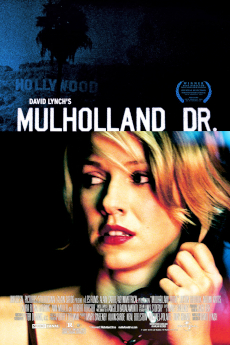
Mulholland Drive

original title: Mulholland Dr.

Comparison:

  • Theatrical Version
  • TV Pilot
Release: Nov 14, 2021 - Author: entire:liam - Translator: Mike Lowrey - external link: IMDB

With Mulholland Drive, David Lynch takes us into a world full of mysteries again: At the beginning Rita (Laura Harring) loses her memory after a car accident in the Hollywood Hills. She flees the scene of the accident and seeks shelter in an empty apartment. The next day, Betty (Naomi Watts) moves in there to start her new life as an actress. When Rita's cover is blown, together they explore her identity as well as the events of the previous night. In the second storyline, Adam (Justin Theroux) seems to be surrounded by suspicious people in connection with his latest film: espresso spitting businessmen, a dimly lit midget with a headset or the ominous "Cowboy" urge him to cast the lead role with the pretty Camilla Rhodes. In between, we join Dan, who must face his fear behind Winkie's, as well as hitman Joe, for whom everything goes wrong during a robbery.


Mulholland Dr. - The TV Pilot and Planning as a TV Series


When David Lynch presented his script for Mulholland Drive to ABC Entertainment, the attending executives initially showed great interest. The TV station hoped for a similar success as in 1990 with Twin Peaks. Yet Lynch had actually wanted to turn his back on television. Not only the abrupt cancellation of earlier TV projects played a role. He also criticized the many commercials and the poor picture and sound quality. His last film Lost Highway was not a great success. Away from the mainstream, however, he had the freedom he needed to realize his projects. The idea for Mulholland Drive already existed since Twin Peaks and was supposed to be a kind of spin-off to the mystery series.

"I will never work in Television again." (David Lynch)

Instead of usually hundreds of thousands of dollars for a successful pitch, ABC provided four and a half million dollars. Disney's Touchstone later contributed another two and a half million. With his commitment, however, Lynch had to reluctantly accept to shoot additional footage. As with Twin Peaks before, a longer version with a completed ending could be marketed away from the US. A few months later, he submitted the finished, 92-page pilot script. The co-chairman greenlit production and set the prospect of seven more episodes in advance for the fall season. Lynch's script, with dream imagery and loose ends, did little to clarify how scenes and characters would relate to each other. Even though he was hired to work this way, there was reason for concern.

Two weeks after the pilot episode was ordered, a meeting was called with ABC staff and the production companies. Lynch was unhappy, but appeared cooperative. Without being specific, he answered few of the many questions asked about the plot. The last scene in the script was the most disturbing: what was the figure behind the wall, covered with black mushrooms and glowing red eyes, toward which the camera was slowly moving? An alien? Lynch denied this and further relieved the panel with a romance between Adam and Betty. Not wanting to make the same mistake he did back with Twin Peaks, he also assured that he would reveal the secret of Rita's identity early on.


With the start of filming, the excitement about the project in Hollywood grew. At ABC, however, nervousness grew with sightings of the first raw footage. The sluggish production hardly reflected the fast-paced script. Displeasure was also caused by the two leading actresses, who were considered too old for television, as well as the offensive footage: strong language, too much naked skin, brain matter flying around and the close-up of dog excrement. The trade-off:

"The poop would take up an eighth of the screen." (David Lynch)

The first workprint was significantly overlong at just under two hours. As a first measure, Lynch was to cut away the last 37 minutes and use them for the subsequent first episode. Disagreeing with this, he made a shorter, approximately 88-minute version overnight. With these cuts, the executives expressed concerns about missing or unrelated scenes and characters introduced too briefly. After a long period of silence, the decision was not revealed until ABC's spring programming presentation: Without a final word on the project, the network decided against the planned TV series. This also put an end to David Lynch's return to television.

"He'd have to be wearing some protective gear. We don't talk about television anymore." (David Lynch)

Takeover by Studio Canal - Completion to feature film


18 months later, Canal Plus became interested in the project. Two years earlier, The Straight Story had already been made in collaboration with Lynch. The French studio paid seven million dollars to ABC for the rights. With reconstructions of the film sets and engagement of the same actors, the budget eventually doubled to fourteen million dollars. With the unused footage and additional filming, the runtime increased by just under an hour.


"I didn't have any ideas for this ending. And one night, I sat down in a chair, and I closed my eyes, and ideas came." (David Lynch)

Lynch wrote a fitting ending and converted the television version into a feature film. He added back finished material that had to give way from his first cut. The scenes around Club Silencio, for example, marked the end of the originally planned international feature film version. Also, the breakfast with Dan and Herb at Winkie's and the walk to the wall may have come from one of the first 1999 versions, as it is part of the pilot script. In May 2001, Mulholland Drive premiered at the Cannes Film Festival. Critics were mostly positive, and Lynch won the Best Director award for his ninth film to date. A few months later, the film was in theaters worldwide, but commercial success failed to materialize.


Theatrical Version vs. TV Pilot - The Differences


Both versions are aimed at a different audience. This is especially clear in the TV version: some characters and their plots were expanded or introduced to be expanded later in further episodes. Worth mentioning here is the police work of the two Detectives McKnight and Domgaard, or the proceedings surrounding Mr. Roque and the Castigliane brothers. For the theatrical version, Adam's friend Wilkins is gone. The characters of Ms. Coco, Betty's grandparents and the "Old Lady" were expanded or invented. In the TV pilot, the color blue plays a larger role. For the theatrical version, it became the frequent depiction of red objects.

The differences in the soundtrack are particularly striking. The TV version plays Angelo Badalamenti's somber Mulholland Drive theme more often. But then, completely unexpectedly (and inappropriately), faster soundtracks play. Possibly these were meant to soften the unintentional "too dark" staging. Also interesting: For the theatrical version, new dubs were made or sound effects were exchanged. The general sequence of scenes also differs. For example, the Joe scene comes earlier in the television version, but The call is much later. This is illustrated, along with the changes briefly explained below, in the overview on the first page of this report.

New scene
Both versions contain additional scenes. For the longer Theatrical Version, these are either from unused footage from the television version or were reshot later.
Extended scene
The majority of changes are shown in extensions of existing scenes. In both versions, these are additional and/or extended shots. The TV pilot thereby also contains sporadic dialogues.
Longer shot
Some shots are also extended only by a few seconds.
Alternative footage
For the Theatrical Version, alternative footage was used or newly produced.
Censorship
In the TV pilot, there's obvious censorship in the shower scene. This was applied for the planned airing on TV.
Audio change
The audio was changed in some scenes.
Scene positioning
The order of the cuts was changed in many scenes.


Comparison


Comparison between the Theatrical Version and the TV Pilot

The Theatrical Version contains
  • 6 new scenes = 11 minutes and 56.8 seconds (+ 48 minutes and 45 seconds starting at 1:38:02)
  • 31 extended scenes = 9 minutes and 14.5 seconds
  • 7 longer shots = 25.8 seconds

The TV Pilot contains
  • 3 new scenes = 5 minutes and 30.2 seconds
  • 30 extended scenes = 10 minutes and 17.7 seconds
  • 20 longer shots = 1 minute and 20.6 seconds
  • 1 censorship

Additionally, there are
  • 5 instances of alternative footage
  • 28 audio changes


Runtime of Theatrical Version: 2:26:49 min (with credits)
Runtime of the TV pilot: 1:28:04 min (without credits)
1 of 7
forward

Theatrical Version

TV Pilot

">
Intro
New scene

Opening title
Extended scene
Scene positioning

Opening title
Scene positioning

Crash
Extended scene
Alternative footage
Scene positioning

Crash
Extended scene
Longer shot
Alternative footage
Scene positioning

Sunset Bvl.
Extended scene
Longer shot
Audio change
Scene positioning

Sunset Bvl.
Longer shot
Audio change
Scene positioning

Investigation
Extended scene
Alternative footage
Audio change
Scene positioning
<

Investigation
Extended scene
Alternative footage
Audio change
Scene positioning

Sunset Bvl. II
Extended scene

Sunset Bvl. II
Extended scene

Behind the diner
New scene

The call
Extended scene
Alternative footage
Audio change

Airport
Extended scene

Airport
Extended scene

Ms. Coco
Extended scene
Longer shot
Audio change

Ms. Coco
Extended scene
Audio change

Betty and Rita

Betty and Rita
Censorship
Extended scene
Audio change

Joe
Extended scene
Longer shot
Audio change

Ryan Entertainment
Extended scene
Alternative footage
Audio change
Scene positioning

Ryan Entertainment
Extended scene
Alternative footage
Audio change
Scene positioning

Revenge

Revenge
Extended scene
Audio change

Mr. Roque
Audio change

Joe
Extended scene
Audio change

What's in your bag?

What's in your bag?
Longer shot
Audio change

Mr. Roque
Extended scene

Who I am?
Extended scene
Scene positioning

The call
Extended scene
Alternative footage

Joe at the diner
Audio change

Joe at the diner
Longer shot

Who I am?
Longer shot
Scene positioning

Laura and Betty II
Extended scene
Scene positioning

Laura and Betty II
Extended scene
Scene positioning
Audio change

Adam comes home
Longer shot
Scene positioning
Audio change

Adam comes home
Extended scene
Longer shot
Scene positioning
Audio change

What happened last night?
Longer shot
Audio change

What happened last night?
Extended scene

Diane
Extended scene
Scene positioning
Audio change

Diane
Extended scene
Longer shot
Scene positioning
Audio change

Kenny
Audio change

Kenny
Extended scene
Longer shot
Audio change

Park Hotel

Park Hotel
Extended scene

Old Lady
New scene

Phone call
New scene

Cowboy
Alternative footage
Audio change

Cowboy
Longer shot
Alternative footage
Audio change

Ms. Coco II
New scene

Detective's
New scene

Audition
Extended scene
Longer shot
Audio change

Audition
Extended scene
Audio change

Sierra Bonita
New scene
Extended scene
Scene positioning
Audio change

Sierra Bonita
Extended scene
Longer shot
Scene positioning
Audio change

Ending
New scene

Club Silencio
New scene

Diane II
New scene

Party
New scene

Ending
New scene
1 of 7
forward